Michaela Nesvarova
 Michaela Nesvarova is a science journalist based in Belgium. With over a decade of experience, she has dedicated a large portion of her career to writing about cutting-edge science, technology and academia, with specific focus on the importance of diversity and inclusion in the broadest sense. After many years as a reporter based in the Netherlands, she relocated to Belgium in 2023 where she has since worked as a freelance journalist for publications such as Horizon Magazine, Science Business and ESMH. She writes about a variety of topics, including health, emergency preparedness, climate and social sciences and humanities.
-
Net-zero energy buildings: Can Europe close the gap between ambition and affordability?
As world leaders prepare to gather for the 31st United Nations Climate Change Conference (COP31), the topic of resilient cities is high on the agenda. In the European Union, buildings are the single largest energy consumer, yet the renovation of Europe's building stock is progressing far more slowly... -
An expert’s opinion: Interview with Prof. Inger Andresen on the importance of developing net-zero energy neighbourhoods
Prof. Inger Andresen is a professor in Integrated Energy Design at the Norwegian University of Science and Technology. She has more than 30 years of experience in research and development within the fields of energy efficient buildings, renewable energy, and low carbon buildings. She focuses on developing... -
An expert’s opinion: Interview with Prof. Eduardo Maldonado on the main obstacles to more net-zero energy buildings
Prof. Eduardo Alberto Baptista Maldonado is a retired Full Professor of Mechanical Engineering at the Faculty of Engineering of the University of Porto and researcher on the topic of Energy Efficiency in Buildings. He was the former president of Portugal's National Innovation Agency (ANI). Prof. Maldonado... -
Living materials that can heal themselves - and maybe the planet too
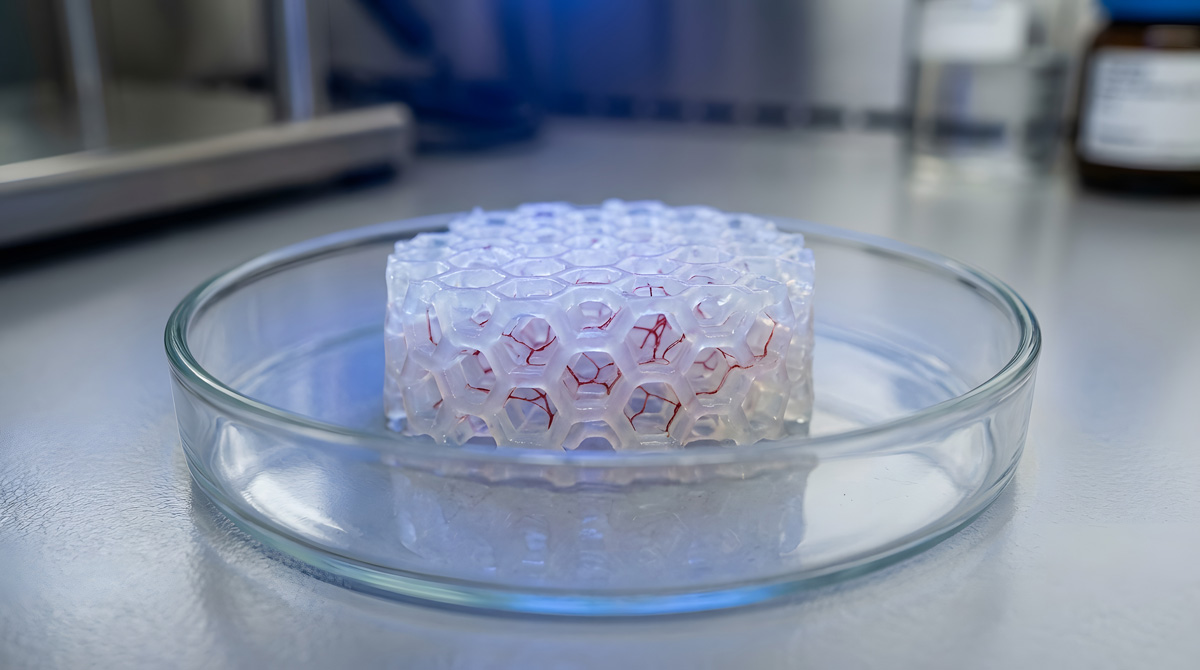 Materials that can grow, adapt, sense, and repair themselves, much like living tissue: however futuristic this might sound, ‘living materials’ are already a reality, and the EU is positioning itself at the forefront of this rapidly evolving field. ‘Engineered living materials’ (ELMs) are composed, either...
-
‘The lifespan of cells is one of the holy grails of engineered living materials’
What are the possibilities and limitations of engineered living materials? Interview with biomedicine and smart materials expert Prof. Dr Andrés Díaz Lantada (Technical University of Madrid, Spain). He has served as principal investigator in several European projects, including TOMAX, UBORA, INKplant,... -
‘Engineered living materials are adaptive, resilient and self-healing’
What are the most promising applications of living materials? Interview with scientific director at the Leibniz Institute for New Materials and professor at Saarland University in Germany, Prof. Dr Wilfried Weber. He is also involved in the European projects STEADY (funded by the European Research Council)... -
The future of automated vehicles in the EU: Interview with Prof. Michael Botsch and Prof. Werner Huber
 Technology can take over an increasing amount of tasks when it comes to driving a vehicle - like braking or steering. The European Union is currently implementing and possibly reviewing some aspects of its regulation in the field of automated, connected and also self-driving vehicles, while vehicle manufacturers...
-
Beyond technology: How social sciences and humanities drive human-centric innovation
 As the European Union (EU) prepares the groundwork for the next Horizon Europe Framework Programme, many experts have been calling for the human and social dimension of progress to be better integrated into the EU’s research and innovation agenda. The STOA workshop ‘Humanities and social sciences at...