
innovation
-
A multilingual news platform for better-informed EU citizens
 Wouldn't it be great to be able to access foreign news in your own language? A recent STOA study explores the idea of a news streaming platform that could transform how EU citizens access information across linguistic boundaries. The ESMH spoke with the two main authors of the study from the Centre...
 -
Transparent and accessible global data critical for European researchers: Interview with Professor Thomas Hartung
 The landscape of scientific research is shaped by global digital infrastructures, with critical databases in health, medicine, climate, and the social sciences. The dominance of foreign and commercial databases poses strategic vulnerabilities for academic freedom, innovation, and research continuity...
 -
A scientist’s opinion: interview with Prof. Stephanie Wehner on the quantum internet
 “The EU now faces a critical choice: continue to lead this transformation, or risk becoming dependent on others for this foundational technology," says computer scientist and quantum physicist Stephanie Wehner. She is Professor in quantum information at Delft University (the Netherlands) and Director...
 -
Is Europe ready for the quantum internet?
 With its unique physical properties, quantum-transmitted data is impossible to eavesdrop on. The EU is at a critical juncture in the development of this groundbreaking technology, with major efforts underway to build the European Quantum Communication Infrastructure. As other regions and countries, such...
 -
A scientist’s opinion: interview with Prof. Angela Sara Cacciapuoti on the quantum internet
 “The quantum internet is not just the next-generation communication network, it is a revolution. By using the weird and counter-intuitive laws of quantum mechanics, it enables a form of information sharing fundamentally impossible in today’s internet.” These are the words of Angela Sara Cacciapuoti,...
 -
Plants driving the future of sustainable technology
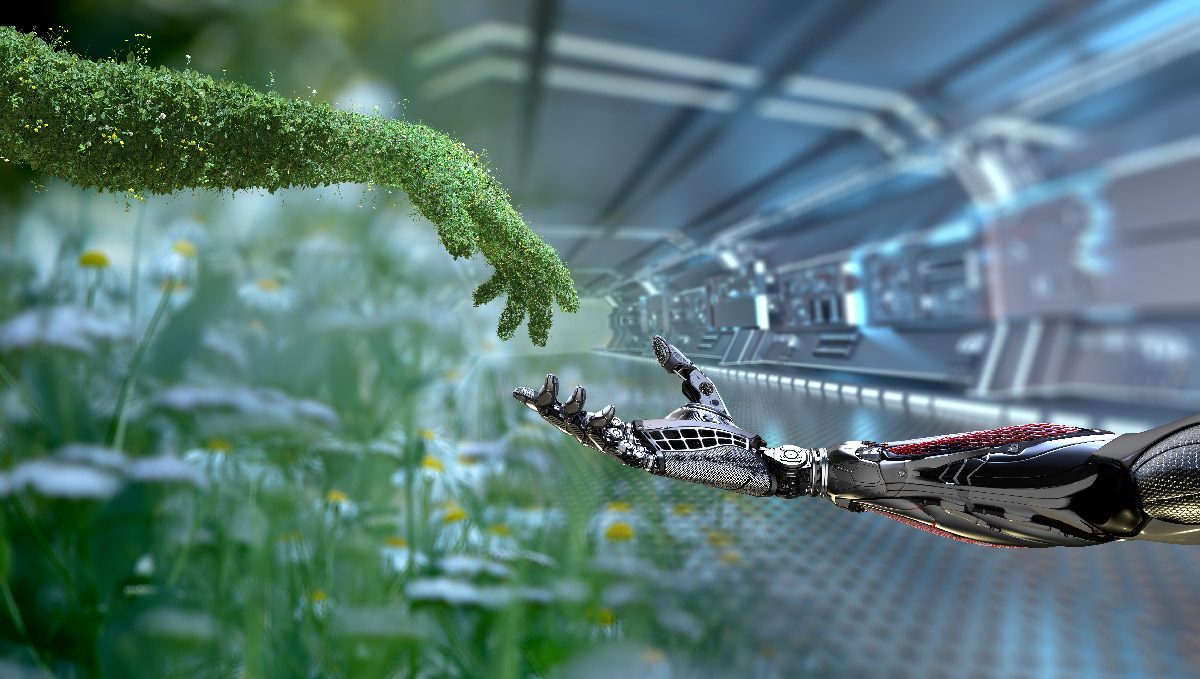 Scientists across Europe seek inspiration from flora to develop robots and materials. Europe is home to more than 20,000 plant species. Shaped by millions of years of evolution to withstand extreme conditions such as, droughts, floods, and harsh winters, plants convert sunlight into oxygen through...
 -
A scientist's opinion: interview with Dr Isabella Fiorello on plant-inspired materials and robots
 You might not expect plants to be able to jump. But wild oats possess almost magical ability: their seeds, though dead and without muscles, use the energy of moisture to bury themselves in the soil, searching for the spot to start a new life. Dr. Isabella Fiorello leads a research group in the Cluster...
 -
A scientist's opinion: interview with Dr Mònica Mir Llorente on robotic plant roots
 In humans and animals, the brain sends signals to indicate hunger, animals go hunting, while humans go to the refrigerator. But in plants, this process is controlled by the roots, which grow toward areas rich in nutrients. This idea inspired the study “Biomimetic Plant-Root-Inspired Robotic Sensor...